
Preface to the Open Letter (Published 23 December 2025)
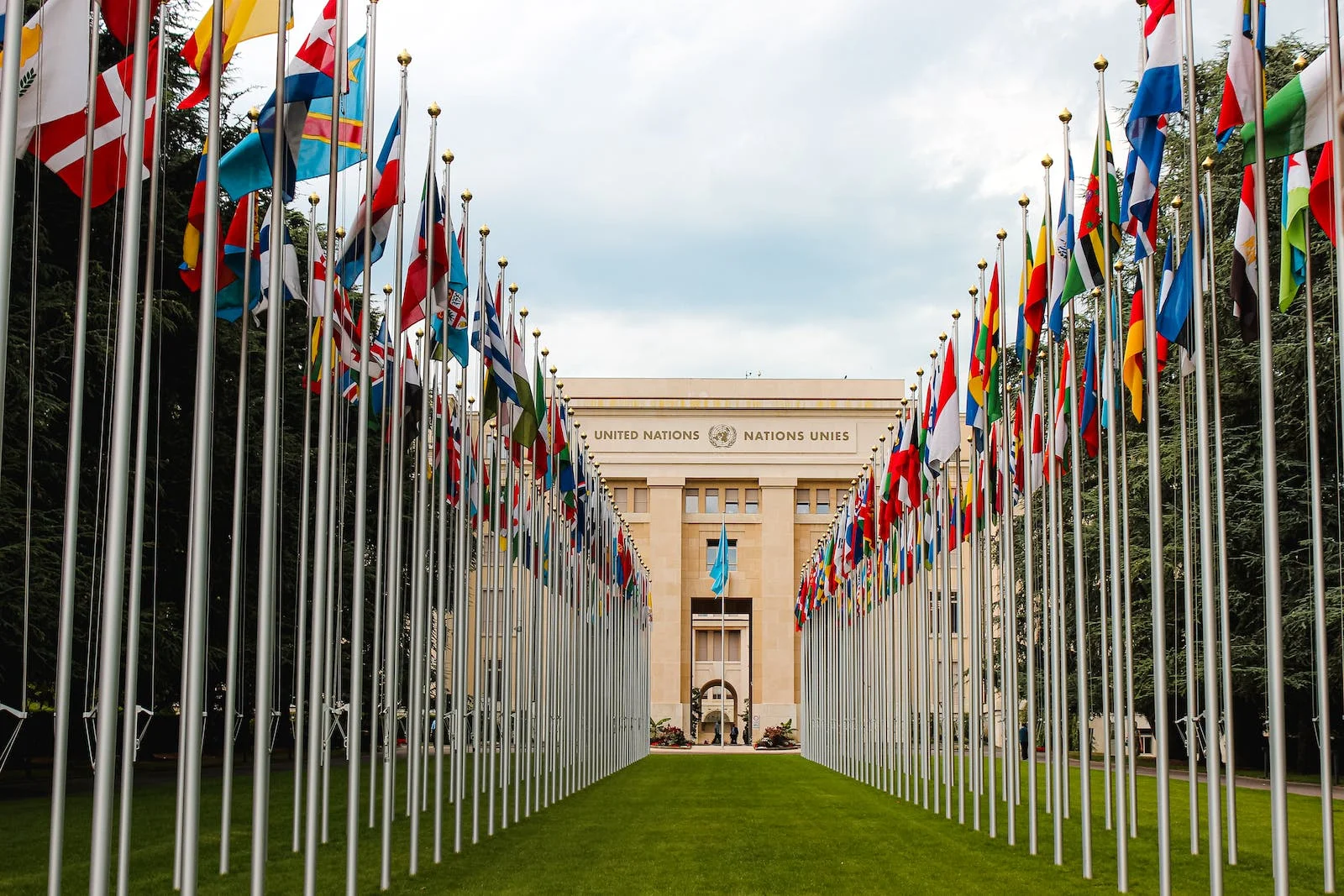
Today, on 23 December 2025, I Am publishing an open letter addressed to the United Nations. It is written and shared openly, not because I expect an immediate response, but because the act of public address itself is part of the democratic responsibility this letter concerns. Based on my experience, I must be honest: I unfortunately expect the same resounding silence from the United Nations that I have, over many years, encountered from the Danish Parliament, individual parliamentarians, and large parts of the media. That expectation is not incidental – it is central to the problem this letter seeks to illuminate.
Throughout history, philosophers and social thinkers have repeatedly warned that the condition of the world is never shaped by institutions alone. It is shaped by the accumulated choices of individuals within those institutions – and by the citizens who tolerate silence, avoidance, and taboo in public life. Hannah Arendt observed how responsibility dissolves when individuals retreat into passivity. John Stuart Mill argued that social pressure and conformity can suffocate truth just as effectively as overt censorship. Democracies, in particular, depend on citizens who are willing to insist that reality itself remains a legitimate subject of public discussion.
The letter below addresses the issue of UAP (Unidentified Anomalous Phenomena), non-human intelligence, and the growing gap between what is increasingly acknowledged in fragments and what is openly addressed in political and international forums. You do not need to agree with every conclusion in the letter to recognize the broader concern it raises: when institutions respond to fundamental questions with silence rather than engagement, the burden of responsibility shifts back to the public. Silence from power is not neutral; it signals that certain realities are considered too disruptive to be discussed openly.
In democratic societies, this places responsibility not only on elected officials and international bodies, but on all of us. We are not merely observers of political culture; we participate in shaping its boundaries – through what we question, what we ignore, and what we allow to remain unsaid. If the letter that follows receives no response, that absence will speak as clearly as any reply. I invite you to read it with that in mind, and to consider what role each of us plays when silence becomes the default answer to questions that concern our shared reality and our shared future.

Open Letter to the United Nations
To the Secretary-General and relevant departments of the United Nations
Dear Secretary-General,
Dear representatives of the United Nations,
Oh Lord, my God…
I write this letter as an act of open civic correspondence, addressed publicly and deliberately to the United Nations as the only global institution whose mandate, legitimacy, and moral responsibility extend beyond national borders. I do so as a citizen of a democratic state, but also as a member of humanity as a whole, at a moment in history where the fragmentation of truth itself threatens global trust, peace, and cooperation.
The subject of this letter is Unidentified Anomalous Phenomena (UAP), the question of non-human intelligence, and the urgent need for a shared ontological foundation upon which democratic societies – and international governance – can function. This is not a call for belief, speculation, or sensationalism. It is a call for transparency, process, and global responsibility in the face of a reality that is increasingly acknowledged in fragments, yet never addressed as a whole.
It is important to state clearly that the issue of unidentified aerial phenomena is not new to the United Nations. In the late 1970s, the matter was formally raised within the UN framework by Sir Eric Matthew Gairy, then Prime Minister of Grenada, who argued that UFO phenomena constituted a global concern rather than a matter of national secrecy. His position was grounded in a simple but profound insight: phenomena that concern all of humanity cannot be responsibly managed by individual states alone. The United Nations General Assembly subsequently adopted Resolution A/33/426 (1978), acknowledging the subject and recommending further study. No permanent, transparent, civilian framework followed. The issue did not disappear because it was resolved, but because it became inconvenient – a fate not unfamiliar to difficult questions.
Nearly half a century later, the same question has returned, now accompanied by far more empirical material. In recent years, the United States has conducted open congressional hearings under oath, heard testimony from military pilots, intelligence officials, and whistleblowers, and acknowledged the existence of phenomena that defy known human technology. Elected representatives have publicly stated that evidence – including sensor data and footage – is being withheld from both Congress and the public under the justification of national security. One need not accept every inference drawn to recognize that democratic oversight has been activated and that the public is being treated as capable to some extend of engaging with reality – an assumption democracies generally depend on.
In much of Europe, however, the response has been markedly different. Political institutions largely avoid the subject altogether. Media outlets show little appetite for engagement. When the issue is mentioned, it is often framed through ridicule or dismissed via the broad and imprecise label of “conspiracy theory,” a term that functions less as analysis than as conversation-stopper. Social psychologists have long described these dynamics as master suppression techniques: invisibilization, ridicule, withholding of information, and the imposition of social shame. These techniques may simplify institutional life, but they do not strengthen democracy. They merely replace inquiry with silence – and silence, while administratively convenient, is rarely a long-term solution.
A functioning democracy, and indeed a functioning international order, requires a shared ontological realism: a basic agreement about what reality is and what may legitimately be discussed. When institutions and citizens no longer inhabit the same reality, trust erodes and speculation fills the vacuum. The question of whether humanity is alone in the universe, and whether interaction with non-human intelligence has occurred, is not a marginal curiosity. It is an ontological question with civilizational implications. It cannot be responsibly managed through omission or stigma, however well-intentioned those strategies may appear.
Humanity has faced such paradigm shifts before. We survived the realization that Earth is not the center of the universe. We survived the discovery that our planet is billions of years old, shaped by geological processes operating on timescales far beyond human history. We survived evolution, deep cosmic time, and even the unsettling fact that the universe does not appear to revolve around us personally. Society did not collapse. On the contrary, science, medicine, and democratic thought flourished. History suggests that reality, while occasionally uncomfortable, is generally preferable to illusion.
The potential benefits of an open, globally coordinated approach to this issue are substantial. Technologies associated with advanced non-human intelligence – particularly in energy systems, materials science, and propulsion – could radically alter humanity’s capacity to address climate change, environmental degradation, and resource scarcity. Clean, abundant energy alone would transform global geopolitics and make many conflicts economically obsolete, which might be a refreshing development. Advances in medicine and biology could dramatically improve quality of life. Perhaps most importantly, the recognition that humanity is not alone could foster a shared planetary identity – one Earth, one home – rendering many of our internal divisions less compelling than they currently appear.
The United Nations is uniquely positioned to engage with this issue – not as a revealer of secrets, but as a facilitator of transparency, process, and international trust. A civilian, non-militarized, globally coordinated framework for inquiry and disclosure would not destabilize the international order; it would strengthen it. The true risk lies not in truth itself, but in the prolonged absence of an honest, shared conversation about it.
Within the halls of the United Nations, one finds the image of the Phoenix – a symbol of renewal, rebirth, and the capacity to rise from ashes after destruction. The Phoenix does not rise by denying the fire, but by transforming through it. If humanity is to rise from the ashes of environmental crisis, persistent conflict, and epistemic fragmentation, it must do so through shared understanding and collective action. We are one species, on one planet, with no known alternative residence. A divided ontology is an unstable foundation for a united world.
If the United Nations is to remain a credible moral authority in the twenty-first century, it must be willing to engage with realities that transcend borders and challenge existing power structures. Reopening this issue is not a threat to global stability; it is an affirmation of global responsibility. Acknowledging reality is not a loss of control – it is the beginning of trust.
I therefore respectfully urge the United Nations to revisit the responsibility it acknowledged decades ago: to treat the question of UAP and non-human intelligence as a matter of global concern, to establish a transparent, civilian framework for international cooperation, and to affirm the public’s right to truth. Not because certainty is guaranteed, but because honesty is indispensable.
With respect, and with hope for courage, wisdom, and collective maturity,
X X X
